
From ancient times to the present, scents have played a significant role in clothing care. Beyond purely practical reasons, such as removing odors, scents were also associated with social status, cultural customs, and aesthetics. This fascinating story spans thousands of years and is full of interesting discoveries and innovations.
Early Experiments with Scents: Ancient Egypt and Mesopotamia
Scent and clothing care began to develop in antiquity. In Egypt, where cleanliness and hygiene were emphasized, aromatic oils and herbs were used not only on the body but also on garments. Essential oils from sandalwood, frankincense, or myrrh were used to fragrance fabrics and simultaneously protect against insects.
Similar practices were known in Mesopotamia, where scents were considered gifts from the gods. Textiles were soaked in fragrant oils, which not only enhanced their aroma but also provided spiritual protection. Aromatic substances, such as cedar and saffron, were among the most valuable commodities.
Ancient Greece and Rome: Luxury and Elegance
In ancient Greece, clothing care and scents were linked to the lifestyle of the upper classes. Wealthy Greeks used special scented soaps made from olive oil and herbs for washing. Garments were then stored in wardrobes along with sachets filled with dried flowers and herbs such as lavender or rosemary.
The Romans took this trend even further. In Roman villas, special rooms for storing clothing were common, where fragrant substances were used for protection and scenting. Perfumes and aromatic oils were applied directly to fabrics, with scents like rose, violet, and iris among the most popular.
Middle Ages: Protection Against Diseases
In the Middle Ages, clothing care was primarily associated with disease prevention. It was believed that bad odors carried infection, so strong fragrances were used to eliminate this problem. Garments were often stored in chests along with herbs such as wormwood, sage, or cloves, which had disinfectant properties.
At royal courts, however, scents were also used to emphasize wealth and status. Fabrics were perfumed with precious essences imported from the Orient. It was common for clothes to be scented with incense before important social events.
Renaissance: Perfume as a Symbol of Prestige
The Renaissance period brought a boom in the use of scents. During this time, the first distilled perfumes were produced, gaining popularity not only among the nobility but also among broader society. Fragrances such as jasmine, bergamot, and lemon were used for washing and storing garments.
It was in this period that the first scented handkerchiefs and fabric inserts were created, which people placed in their clothing to keep garments fragrant throughout the day. Perfumes became an integral part of the wardrobe and a symbol of taste.
Industrial Revolution: Scents for Everyone
With the advent of the industrial revolution, clothing care changed. New technologies allowed the mass production of soaps and laundry detergents enriched with fragrances. Scents became accessible to everyone, not just the elite. Lavender, lemon, and rose were among the most commonly used essences.
During this period, the first chemical scents were also developed, imitating natural aromas. These synthetic fragrances were cheaper and more stable, allowing their wider use in detergents and fabric softeners.
Modern Era: Personalization of Scents
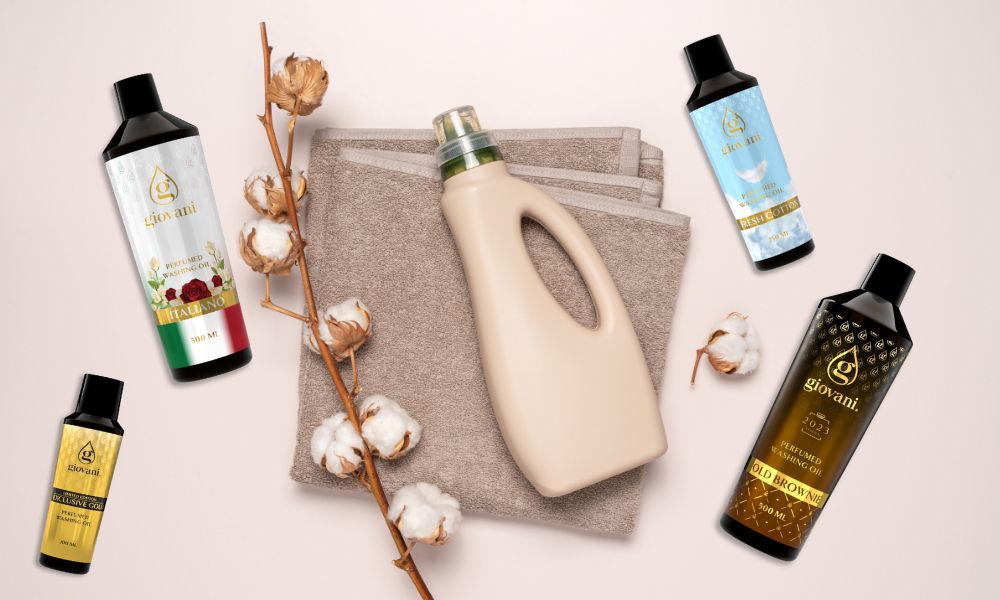
Today, clothing care is closely linked to personalization. Scents are adapted to individual tastes and lifestyles. The market offers a wide range of products from eco-friendly and natural products to luxury laundry perfumes.
Natural scents such as lavender, eucalyptus, or lemongrass are popular for their freshness and ability to neutralize odors. On the other hand, modern synthetic fragrances offer complex and long-lasting aromas, giving clothing a unique character.

The Future of Scents in Clothing Care
With the growing emphasis on sustainability and eco-friendly care, the development of scents in clothing care focuses on natural and biodegradable ingredients. Manufacturers invest in research that allows creating fragrances without harmful chemicals and with a reduced environmental impact.
Personalized scents, which customers can mix according to their preferences, are another step in this evolution. Technology will enable everyone to create their own unique scent, reflecting their personality and style.
Scent as Part of Our Identity
The history of scents in clothing care is a story of innovation, cultural customs, and aesthetics. Scents have played a key role in our daily lives and continue to influence how we perceive ourselves and our surroundings. Whether it is lavender sachets in the wardrobe or luxury laundry perfumes, scents remain an integral part of clothing care.
In today's world, we have the option to choose fragrances that reflect our style, mood, and values. The story of scents in clothing care is an example of how small details can greatly enrich our daily lives.